
Tummy Tuck Cost (Abdominoplasty): What You Should Know
If you’re researching tummy tuck surgery in Sydney, you’ve probably noticed that prices vary enormously, sometimes by tens of thousands of dollars. That can be frustrating when you’re trying to figure out what’s reasonable, what’s a red flag, and whether Medicare or private health insurance can help.
This guide breaks it all down clearly: what you’ll typically pay in Sydney, what drives the cost up or down, and when you might be eligible for a Medicare rebate.
How Much Does a Tummy Tuck Cost in Sydney?
In Sydney, an all-inclusive abdominoplasty package covering surgeon fees, hospital, and anaesthesia generally falls in these ranges:
- With eligible private health insurance and Medicare: $15,000 – $25,000 out of pocket
- Without insurance (cosmetic/elective): $22,000 – $35,000+
These figures cover a full abdominoplasty. A mini tummy tuck, which addresses only the lower abdomen and suits patients with mild skin laxity, starts at around $10,000–$15,000. Cost aside, the right choice also depends on how much muscle repair and skin excess you have, since different types of tummy tucks address quite different problems.
Keep in mind these are all-in estimates. The final quote you receive will reflect your specific anatomy, the complexity of your surgery, and the surgeon you choose.
What’s Included in the Total Cost?
Abdominoplasty pricing is made up of several components. Understanding each one helps you compare quotes accurately.
Surgeon’s Fee
This is the largest component, typically ranging from $12,000 to $25,000+. It reflects the surgeon’s qualifications, experience, and the complexity of the procedure. A surgeon who is a Fellow of the Royal Australasian College of Surgeons (FRACS) has completed rigorous, accredited specialist training, and their fees reflect that. As a general principle, the more specialised and experienced the surgeon, the higher this fee.
Hospital and Anaesthetist Fees
Theatre time, your anaesthetist, and any overnight stay are billed separately from the surgeon’s fee. For a full abdominoplasty, expect these costs to run from around $8,000 to $13,000. If your surgery requires a hospital stay of two to three nights, costs at the higher end of this range are typical.
Post-Operative Essentials
These are easy to overlook when budgeting. After surgery, you’ll need compression garments (worn for several weeks), prescription medications for pain management, and potentially lymphatic massage sessions. Budget an additional $500 – $1,500 for these.
Pre-Operative Tests
Before surgery, your surgeon will require blood tests, and depending on your health history, may request imaging or additional pathology. These costs vary but are worth confirming in advance.
What Makes the Price Go Up (or Down)?
Your Surgeon’s Qualifications and Experience
In Australia, there is an important distinction between a specialist plastic surgeon with FRACS qualifications and a general practitioner who has completed a short cosmetic surgery course. The latter can legally perform cosmetic surgery but has far less surgical training. FRACS-qualified surgeons generally charge more.
The Complexity of Your Procedure
A straightforward tummy tuck on a patient with good skin elasticity is very different from a case involving extensive muscle repair, significant skin excess, or combined liposuction. More complex cases mean longer theatre time, greater surgical skill, and higher fees.
Your Geographic Location
Surgical costs in Sydney and Melbourne are higher than in most other states, reflecting both the cost of operating facilities and the demand for specialists.
Will Medicare Cover a Tummy Tuck?
Medicare doesn’t cover elective cosmetic surgery. But for patients who meet strict medical criteria, a partial rebate may be available under specific Medicare Benefits Schedule (MBS) item numbers. Here’s a plain-language summary of the two most relevant ones:
MBS Item 30175 (Post-pregnancy abdominoplasty with diastasis recti repair)
Introduced on 1 July 2022 by the Australian Government, this item was created specifically to support mothers with rectus diastasis (separation of the abdominal muscles) following pregnancy. To be eligible, you generally need to meet the following criteria, as set out by MBS Online:
- A documented diastasis of at least 3 cm, confirmed by diagnostic imaging (ultrasound, CT, or MRI)
- Moderate pain or discomfort at the site of the separation during functional activity, and/or lower back pain or urinary symptoms
- Failure to respond to non-surgical conservative treatment, including physiotherapy
- At least 12 months post-pregnancy
This item can only be claimed once per lifetime.
MBS Item 30177 (Abdominoplasty following significant weight loss)
This item applies to patients who have lost significant weight and developed excess abdominal skin that causes ongoing skin conditions or interferes with daily activities. Eligibility criteria include evidence of non-surgical treatment for at least three months, a stable weight for at least six months, and photographic documentation.
If you qualify for either item number, your private health insurer will generally contribute to the hospital component of your costs, which can meaningfully reduce your out-of-pocket total.
MBS criteria and rebate amounts are subject to change. Always confirm current eligibility requirements directly with Medicare and your private health fund before making any decisions.
What Does Private Health Insurance Cover?
If you hold appropriate hospital cover and qualify for a Medicare item number, your health fund will typically cover most or all of the hospital and theatre fees. What private health insurance won’t cover is the cosmetic component of the surgeon’s fee. That gap remains your responsibility.
The level of cover you hold matters too. Not all hospital policies include plastic and reconstructive surgery. It’s worth calling your fund before your consultation to confirm what’s covered under your policy for the relevant item numbers.
What About Financing?
Many reputable clinics offer surgical finance plans through third-party providers, allowing you to spread the cost over time. If you’re considering a finance arrangement, read the terms carefully. Interest rates and repayment periods vary significantly. It’s worth speaking to your surgeon’s patient coordinator, who can outline what’s available.
A Note on Combining Procedures
If you’re also considering breast surgery alongside your tummy tuck, a mummy makeover (which combines breast and abdominal procedures in a single operation) can reduce the overall cost compared to having each procedure separately. This is because you share anaesthesia and theatre time across both surgeries, rather than paying for two separate sessions.
Getting a Personalised Quote
Because tummy tuck pricing depends so heavily on individual factors, published price ranges will only get you so far. The most accurate way to understand your costs is to book a consultation with a qualified specialist surgeon, who can assess your specific situation and provide a clear, itemised quote.
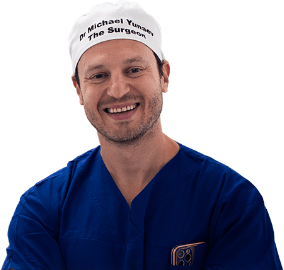
Breast & Body Clinic is a specialist surgical practice in Sydney led by Dr Michael Yunaev, a FRACS-qualified surgeon with a dedicated focus on breast and body procedures. Dr Yunaev can assess your specific situation, discuss which surgical approach is right for you, and provide a clear, itemised quote that covers all components.
Book a consultation with Dr Yunaev to get a clear picture of what your surgery involves and what it will cost.
This article is intended as general information only and does not constitute medical or financial advice. Medicare eligibility criteria and rebate amounts are subject to change — please verify current details via MBS Online or speak directly with your GP and surgeon.









 Ask a Question
 Call Us
 Book a Consult