

Noticing a lump, bulge, or discomfort in your abdomen or groin could be a sign of a hernia. Hernias are common, and consulting a hernia specialist or visiting a hernia clinic in Sydney can help you understand your condition and find the most appropriate treatment.
At BB Clinic, Dr Michael Yunaev, a FRACS-qualified specialist breast and general surgeon, performs both open and laparoscopic (keyhole) hernia surgery. These procedures effectively repair the hernia, support the abdominal wall, and help you recover comfortably.
WHAT IS A HERNIA?
A hernia is an abnormal protrusion of abdominal contents through a weakness in the abdominal wall. The outcome of this process is a lump, which can contain fat or bowel contents or both, that initially pops in and out of the weak area. This is called a reducible hernia. This can cause intermittent pain and discomfort or may be asymptomatic.
Eventually (at a rate of 1% per year), it may progress to a symptomatic hernia or an incarcerated hernia, where the lump and its contents are no longer able to pop back into the abdomen and persist stuck in the weak point of the abdomen. At this stage, it may become persistently uncomfortable and swollen, potentially interfering with normal activities and requiring urgent medical attention.
A special case of incarcerated hernia is when it contains bowel. This can progress to a strangulated hernia, in which the bowel and its blood supply are tightly constricted, potentially leading to tissue damage. This is a serious condition that usually requires prompt surgical treatment.
Common Locations for Hernias
Hernias can occur in multiple locations around the abdominal wall; the most common sites are:
• Groin: inguinal and femoral hernias
• Front of the abdomen: umbilical, paraumbilical, epigastric, and incisional hernias
There are also rare types of hernias, such as spigelian, lumbar, and obturator hernias, as well as internal hernias and diaphragmatic hernias, including hiatus hernias.
Hernia Surgery in Sydney

Who May Benefit from Hernia Surgery?
Not all hernias need surgery, but it’s often the best option if:
• You feel pain, pressure, or discomfort
• The hernia is growing or more noticeable
• A reducible hernia sometimes gets stuck
• You want to prevent future problems
• You’re healthy enough for a safe procedure
Even older patients or those with other medical conditions can often be treated safely. Many individuals seek the best hernia surgeon in Sydney to discuss their options.
At BB Clinic, Dr Yunaev provides tailored treatment plans for each patient, including those requiring groin surgery in Sydney.
Treatment Options for Hernias
There are 2 main approaches to treating hernias. Both include placement of a mesh (a synthetic or biological material) to support the weak area affected. The differences are how that mesh is placed in its position and also in what position it is actually placed, which can affect the result as well.
The approaches are:
• Open (or traditional) surgery is the most common approach and is safe, effective and has low recurrence rates.
• Laparoscopic (or Keyhole) surgery is a different method, which has equivalent results to open surgery with the advantage of quicker recovery and return to work and normal activities.
Both approaches have their place depending on the clinical situation, but the laparoscopic technique is Dr Yunaev’s preferred method and is considered the standard of care for both initial and revisional hernia surgeries.
During your consultation, after a thorough assessment, we will be able to advise you on the appropriate further investigation or procedure choice and discuss the pros and cons of these.
Recovery and Aftercare
Recovery depends on the type of hernia surgery:
Laparoscopic (Keyhole) Surgery
• Light activities in a few days; return to work in 1–2 weeks
• Mild pain and swelling, managed with medication
• Avoid heavy lifting or strenuous activity for 2–4 weeks
Open (Traditional) Surgery
• Light activities in 1–2 weeks; return to normal activity in 4–6 weeks
• Some discomfort or swelling is normal
• Gradual return to activities as advised by your surgeon
General Tips
• Keep the surgical site clean and dry
• Maintain a healthy diet and stay hydrated
• Watch for unusual pain, swelling, or redness and contact your surgeon if needed
Most patients notice improved comfort and mobility after surgery. Checking hernia before and after surgery photos can give a clear idea of what to expect.
Benefits of Hernia Repair
Have a question for Dr Yunaev on this procedure?
Your question will be answered within 24 hours by Dr Yunaev; a Specialist Breast and General Surgeon with extensive training and experience.



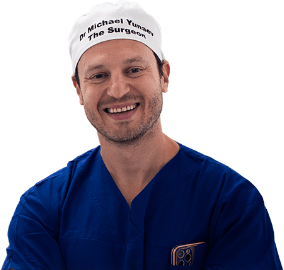
“My team and I are committed to tailoring a personalised approach to you and your concerns so that you may benefit from our expertise and we can meet your expectations.” Dr Michael Yunaev
MS (Breast Surgery), BreastSurgANZ Breast Fellow, Aesthetic Breast and Body Fellow, FRACS (General Surgery), MPH, BMedSc (Hons).


Related Blog Posts

21 September 2026
Oncoplastic vs Standard Breast-Conserving Surgery: Understanding Your Options
A breast cancer diagnosis brings a wave of decisions, and few feel as personal as choosing how your surgery will be performed. For many women, breast-conserving surgery (removing the cancer while keeping the rest of the breast intact) is a safe and effective …
21 September 2026
Management of the Axilla in patients with Breast Cancer: De-escalation of Treatment
For most of the last decade, women who were told they had a positive lymph node were also told that the whole armpit needs to come out. That’s no longer automatically true. A sentinel node biopsy that comes back positive is now the …


 Ask a Question
 Call Us
 Book a Consult