
Your belly button is one of the first things you’ll check in the mirror after abdominoplasty, and it changes more than most people expect. During a full tummy tuck, the navel is detached, kept alive on its own blood supply, and set into a fresh opening in the tightened skin.
Knowing the tummy tuck belly button healing stages and how it’s made, how it looks week by week, and how to care for it takes a lot of the worry out of recovery. Here’s what to expect, and when something is worth a call to your surgeon.
Key Takeaways
- In a full tummy tuck, your surgeon moves the belly button to a new opening rather than removing it, a step called umbilical transposition.
- The belly button heals in three overlapping stages, from early swelling and crusting to a settled, mature scar over roughly eight weeks to six months, with the scar continuing to fade for up to a year.
- Early belly button care after a tummy tuck is mostly gentle cleaning, keeping dressings as directed, and protecting the area.
- Minor asymmetry, a fine scar around the rim, and changed sensation are common and usually settle; anything painful, hot, or oozing is worth a call.
Do You Lose Your Belly Button After a Tummy Tuck?
No, in a full abdominoplasty, you keep your own belly button. It’s repositioned, not removed. The navel is attached deep down to the abdominal wall along a tough midline band of connective tissue called the linea alba. Because of that deep attachment, your surgeon can free the belly button from the surrounding skin while it remains connected to its underlying blood supply.
That step is called umbilical transposition. The surgeon cuts a small circle around the navel and separates it from the skin around it, keeping it tethered to the abdominal wall. The loosened sheet of skin and fat above it is then lifted, the abdominal muscles are tightened (repairing any separation, known as diastasis), and the skin is drawn downward and trimmed at the bikini line. Because the skin has shifted down, the original belly-button hole no longer lines up, so the surgeon creates a new opening in the right spot and stitches the navel neatly into it.
When done well, this can improve how the belly button looks, especially if pregnancy or weight changes have left it stretched or hooded. People who come to abdominoplasty after childbirth, often as part of a mummy makeover, or as part of post-weight-loss surgery, often notice the biggest change.
How much the navel is moved depends on your anatomy and the different types of tummy tucks. A mini tummy tuck often leaves the underlying tissues largely untouched, whereas a full abdominoplasty involves transposition.
Tummy Tuck Belly Button Healing Stages
Belly button healing after a tummy tuck follows the same broad path as any surgical wound: an early inflammatory phase, a rebuilding phase, then a long remodelling phase where the scar matures. Skin repair involves overlapping phases of haemostasis, inflammation, proliferation, and remodelling. The week markers below are typical, not a set-in-stone schedule.
Early stage: the first one to two weeks
In the first days, expect the navel to look swollen, bruised and darker than usual, often with some dried blood or a crust around the rim. It may feel tight, tender or numb. You’ll usually have a small dressing, and sometimes a bolster or surgical tape tucked into the navel to support its new shape. This is the inflammatory phase, when the body cleans the wound and lays the groundwork for repair.
Weeks two to eight: the navel settles
As stitches dissolve or come out (usually within the first week or two), the rim starts to knit together and a fine scar forms. Around now, the scar can look pink or red, feel slightly raised, firm or itchy, and the navel may sit a little differently than it used to. This is the proliferative phase, when new tissue and tiny blood vessels build in, so the redness is a sign of healthy blood flow. Swelling gradually eases, and the shape continues to refine.
Two months to a year: the scar matures
By around 8 weeks to 6 months, the belly button has usually reached its final appearance. The scar then keeps remodelling quietly for months. Most fading happens in the first six months, but a surgical scar can take up to a year to settle into a pale, flat line.. A small number of people are still seeing gradual change past the twelve-month mark, which is normal.
How long does belly button healing after a tummy tuck take?
For most people, the navel settles between 8 weeks and 6 months, and the scar continues to soften and lighten for up to a year. Healing speed varies with age, general health, smoking status and how closely aftercare is followed, so your own timeline is best confirmed with your surgeon at your follow-up visits.
Belly Button Care After a Tummy Tuck
Good aftercare protects the new navel while its blood supply re-establishes and the scar matures. The specifics come from your surgeon, but the essentials are consistent:
- Keep it clean and dry. Gently clean as directed and pat dry. Moisture trapped in the navel can invite irritation or infection. Ask before using any ointment, and only apply what your surgeon recommends.
- Leave dressings, tape or a bolster in place as instructed. If a crust forms, don’t pick at it; let it separate on its own.
- Wear your compression garment. It supports the abdomen, helps control swelling and takes tension off the healing skin.
- Protect the scar from the sun. New scar tissue burns and darkens easily, so cover it or use sunscreen once the wound has fully closed.
- Ease back into movement. Avoid heavy lifting and strenuous exercise for as long as your surgeon advises, so tension doesn’t drag on the healing rim. Our abdominoplasty recovery tips cover the wider recovery.
- Be patient with the look. It’s normal for the belly button to change appearance during healing before it settles.
How Your Belly Button Might Look Afterwards
Most people are happy with a natural-looking navel, but a few cosmetic quirks can show up as things settle:
- Asymmetry. Small differences in position or shape are common, since skin is removed and re-draped by hand. Minor unevenness often becomes less noticeable as swelling resolves; if it still bothers you in the long term, a minor revision can refine it. The Australian Society of Plastic Surgeons notes that revisional surgery is sometimes used to correct small irregularities.
- Scarring. A fine scar sits around the rim of the navel, placed to stay discreet. Some people scar more visibly than others, and raised or thickened (hypertrophic) scars can occur. Silicone treatments and time usually help.
- Changed sensation. The area around the belly button can feel numb, tingly, or oversensitive for a while as the nerves recover. According to the same Australian Society of Plastic Surgeons guidance, numbness around operated sites is usually temporary and improves over many months.
For the rare complication where the navel’s blood supply is compromised, belly button necrosis is covered in detail in a separate article. It’s uncommon and quite different from the normal appearance changes above.
When to Call Your Surgeon
Some tenderness, swelling and a little fluid is expected early on. Contact your surgeon or clinic promptly, though, if you notice:
- Pain that isn’t eased by your prescribed pain relief
- Bleeding that won’t settle with light, clean pressure
- Signs of infection, such as spreading redness, warmth, swelling, pus or a fever
- A bad smell or unusual discharge from the navel
- The belly button turning dark, dusky or black, which can signal a blood-supply problem
- Calf pain, swelling or breathlessness, which need urgent medical attention
When in doubt, call. It’s always better to have a healing belly button checked early.
Meet with Dr Yunaev
Knowing the tummy tuck belly button healing stages ahead of time makes the whole recovery feel more predictable. If you’re weighing up abdominoplasty and want a clear picture of how your belly button would be handled and what recovery looks like for you, a consultation is the place to start.
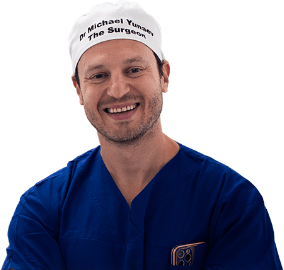
Dr Michael Yunaev is a Specialist Breast and General Surgeon (FRACS) who performs tummy tuck surgery in Sydney. His background in both aesthetic and general surgery means he plans the navel with its blood supply and your final look in mind.
Book a consultation with Dr Yunaev to talk through your goals, your questions and a tailored plan. Call (02) 9819 7449 or request an appointment online.
Any surgical procedure carries risks, which your surgeon will discuss with you in full.








 Ask a Question
 Call Us
 Book a Consult