
Skin lesion removal costs in Australia depend on three things: the lesion itself, how it’s removed, and where it sits on your body. The government’s Medical Costs Finder shows the typical specialist fees of $1,700, a typical Medicare coverage of $650, and a separate hospital fee of $1,500 when the lesion is removed in hospital.
Those figures are just a guide. Below, we break down what drives the price, when Medicare helps and what the extra bills are.
Quick Answer
- What you’ll pay: a consultation, the procedure and pathology. They’re billed separately, and pathology isn’t part of a clinic’s quote.
- Medicare pays a rebate when removal is medically necessary, such as for a suspicious, changing, bleeding, or symptomatic lesion. Purely cosmetic removal gets no rebate.
- Why there’s still a gap: the rebate is a percentage of the Medicare schedule fee, not of what your surgeon charges.
- Referral: a GP referral lets you claim the specialist rebate when you see a surgeon.
- Rooms or hospital: private health insurance only helps if you’re admitted to hospital. It doesn’t pay for a procedure in the rooms.
How Much Does Skin Lesion Removal Cost in Australia?
A single invoice rarely covers everything. BB Clinic’s skin lesion removal page splits the cost into three parts: the consultation, the procedure, and pathology.
Pathology is billed separately by the laboratory. Our current fees are listed on the Pricing page, and consultation fees are paid at the time of booking.
Here’s how the Medicare side works. Take item 31362, which covers excising a non-malignant lesion under 14 mm from the face, neck, scalp, or lower leg. The Medicare Benefits Schedule lists a schedule fee of $160.30 and an out-of-hospital benefit of $136.30 (checked November 2026).
A specialist’s actual fee can be higher than the schedule fee. That’s where a gap comes from.
Does the Removal Method Change the Price?
Yes. Four methods are used for skin lesion removal, each requiring different amounts of time, equipment, and closure. Your surgeon recommends one after examining the lesion.
Surgical excision
The lesion is cut out with a margin of normal skin, and the wound is usually closed with stitches. It suits suspicious, deeper or larger lesions, and many on the face. It’s often the most involved of the four, so it usually costs more. The whole lesion goes to pathology.
Shave removal
A fine blade slices a raised lesion off level with the skin. It suits raised lesions that look harmless. Stitches usually aren’t needed, which keeps the procedure simpler. The sample still goes to pathology.
Curettage
The lesion is scooped or scraped away with a small curved instrument. Like shave removal, it suits raised lesions that look harmless, and the tissue is sent for testing.
Punch biopsy
A small round blade takes a core of skin. It’s used for small lesions or to sample part of a larger one. Stitches are sometimes needed.
All four go to pathology, so the lab fee applies whichever you choose.
Is Skin Lesion Removal Covered by Medicare?
It depends on why you’re having it done.
- Medically necessary removal: Medicare pays a rebate toward the consultation and procedure when a lesion is suspicious, changing, bleeding, or causing symptoms. This is the usual reason.
- Cosmetic removal: Medicare and private health insurance don’t cover it. You pay the full cost. Our guide on whether Medicare covers plastic surgery explains how Medicare distinguishes between the two.
Some lesions are excluded on principle. The surgical items for non-malignant lesions don’t apply to common warts or seborrheic keratoses (harmless, waxy “stuck-on” spots).
Does Medicare pay for pathology?
Medicare’s excision items depend on pathology. The specimen must go for histological examination (testing under a microscope) for non-malignant lesion items. For clinically suspected melanoma, the surgeon can bill whatever the result is, as long as the specimen is sent.
The result also decides which item is used. A benign result and a cancer result are billed under different items.
Why is the rebate smaller than the fee?
Out-of-hospital, Medicare’s benefit for specialist services is 85% of the schedule fee. For in-hospital services for private patients, the rate is 75%. The patient pays any difference between the benefit and the fee charged.
Because that percentage applies to the schedule fee, not your surgeon’s fee, the rebate is usually smaller than what you’re charged.
Why Does the Lesion’s Location Affect Skin Lesion Removal Cost?
The Medical Costs Finder entry covers lesions on the head, neck, genitals, hands, lower leg and feet. Closing a wound in these areas requires more care because the skin is thinner or tighter, or sits over structures that need protection.
The Medicare schedule also treats these sites separately. Its lesion items group the face, neck, scalp, and distal limbs together and use a smaller size threshold of 14 mm.
That extra care usually adds to the fee. What you gain is a neater scar, though no surgeon can promise how a scar will look.
Rooms or Hospital: Does it Change the Bill?
Yes. Most removals are done under local anaesthetic, so you’re awake, but the area is numbed. Many can be done in the rooms.
If a procedure is done outside the rooms, a facility or anaesthetic cost applies. The Medical Costs Finder shows a separate hospital fee for lesions removed in hospital.
Private health insurance helps only with an admission. It doesn’t cover specialist visits in their rooms. Check your policy for excess and waiting periods before you book.
What do Pathology and Follow-Up Add?
Pathology results are usually back within two weeks, and we book a review to go through them. The lab bills you separately. Under Department of Health guidance, pathologists may accept the Medicare rebate as full payment (bulk billing), or you may pay a gap. Ask the lab or your surgeon which applies.
Sometimes the result shows the lesion wasn’t fully removed. A further excision may then be needed, increasing the total.
Should You See a GP or a Surgeon?
GPs can often remove simple lesions with a shave or small excision. Larger, facial, eyelid, suspicious or regrown lesions are often referred to a surgeon. A skin cancer clinic or dermatologist can also remove suspicious lesions.
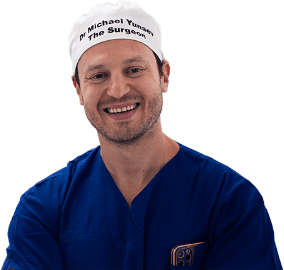
To see Dr Michael Yunaev, you’ll need a GP referral. It lets you claim the specialist rebate on your consultation. Most referrals last 12 months, and one referral covers all your visits for that condition.
If your lesion has already been diagnosed as cancer, our skin cancer and melanoma surgery Sydney page explains how that surgery works.
Want to know what your own removal might cost? Our team can explain the consultation, procedure and pathology costs before you book. Call us on (02) 9819 7449.
Frequently Asked Questions
How much does skin lesion removal cost?
It varies with the lesion, method and location. A bill has three parts: the consultation, the procedure and pathology. The Medical Costs Finder shows typical fees for private patients.
Is skin lesion removal covered by Medicare?
When removal is medically needed, Medicare pays a rebate towards the consultation and procedure. It doesn’t cover cosmetic removal. The rebate is a percentage of the schedule fee, so a gap usually remains. Your surgeon can explain what applies to your lesion.
Do I need a referral to have a skin lesion removed?
Not to see a GP. To claim the Medicare rebate for a surgeon’s consultation, you need a GP referral, and BB Clinic doesn’t see patients for skin lesion surgery without one. Most referrals last 12 months from your first specialist visit.
Does a removed skin lesion need to go to pathology?
Yes. Every lesion removed surgically at BB Clinic is sent for pathology to determine whether it’s benign or more serious. Results usually take up to two weeks. Medicare’s excision items for non-malignant lesions also require the specimen to be sent.
How long does a skin lesion take to heal after removal?
Most people return to daily activities within a day or two. Stitches come out after 5 to 7 days on the face and 10 to 14 days on the body. The wound closes in about two weeks. The scar can look pink for weeks and usually fades over 3 to 12 months.
Can private health insurance cover skin lesion removal?
Only if you’re admitted to hospital. Private cover doesn’t pay for specialist consultations or procedures done in the rooms. Check your policy for any excess and waiting periods, then ask your surgeon whether your lesion requires hospital admission.
Is cosmetic mole removal covered by Medicare?
No. If a lesion is harmless and you want it removed for cosmetic reasons, Medicare and private health insurance don’t cover the cost, so you pay the full amount. Lesions that are suspicious, changing, bleeding or symptomatic are treated as medically needed. For a full breakdown of fees for moles specifically, see our guide to mole removal cost.
This article is general information, not medical advice. Costs vary between patients and providers, and every figure here is a guide, not a quote. Please talk to your GP or surgeon about your own situation.








 Ask a Question
 Call Us
 Book a Consult