
If you’ve booked in for breast augmentation surgery, chances are the recovery process is playing on your mind. If you haven’t decided on surgery yet, it might be playing a role in your decision-making process.
How much will it hurt? When can you go back to work? When will your breasts actually look like your breasts? A straightforward breast augmentation recovery generally follows a predictable pattern: most women take about a week off work, avoid strenuous exercise for about 6 weeks, and see their final result settle in over 3 to 6 months.
Below, Dr Michael Yunaev breaks down recovery after breast augmentation week by week, so you know what’s normal and what’s worth a phone call.
Breast Augmentation Recovery Timeline
- First 3–5 days: The most uncomfortable stretch. Expect tightness, swelling and some soreness, managed with prescribed pain relief.
- Week 1: Most desk-based patients return to work. Upper arm movement is still limited.
- Weeks 2–3: Swelling and bruising fade noticeably. Light daily activities feel comfortable again.
- Weeks 4–6: Cleared for full exercise, including chest workouts, once your surgeon confirms healing is on track.
- Weeks 7–12: Implants continue to “drop and fluff” into a softer, more natural position.
- 6–12 months: Final results are visible, scars have faded significantly, and breast implant recovery time is essentially complete.
The exact pattern depends on whether implants are placed above or below the muscle, whether you’ve combined augmentation with a breast lift, and your own healing capacity, but the week-by-week breakdown below reflects what most patients experience during recovery after breast augmentation.
Breast Augmentation Recovery: Timeline Snapshot
| Stage | How you’ll likely feel | What you can typically do |
| Day of surgery | Groggy, sore, breasts feel tight and high | Rest at home with someone to help; no driving |
| Days 3–5 | Peak swelling and bruising; tenderness | Short walks around the house; light chores only |
| Week 1 | Discomfort easing; still tight | Return to a desk job; avoid lifting or reaching overhead |
| Weeks 2–3 | Noticeably more comfortable | Light daily activities; driving once off strong painkillers |
| Weeks 4–6 | Mostly back to normal | Return to full exercise once cleared by your surgeon |
| Weeks 7–12 | Implants softening and settling | Full activity, including chest-focused workouts |
| 6–12 months | Breasts feel soft and natural | Enjoy your final results |
Day of Surgery
Breast augmentation mammaplasty is usually performed as a day procedure under general anaesthesia, so you’ll spend time in a recovery area before being discharged home the same day. You’ll feel drowsy and disoriented as the anaesthetic wears off, and your breasts will feel tight, high and swollen. This is completely normal and not a preview of your final shape. You’ll need someone to drive you home, since you won’t be fit to drive yourself, and it’s a good idea to have someone stay with you overnight.
Days 3–5: The Toughest Stretch
Swelling and bruising typically peak in the first 48 to 72 hours before beginning to settle. This is when most patients feel the most discomfort, managed with the pain relief your surgeon prescribes. Getting up and moving gently (short walks around the house) supports circulation and reduces the risk of blood clots, even though you’ll want to avoid anything strenuous. Keep your compression garment or surgical bra on as instructed, and try to sleep on your back with your upper body slightly raised to keep pressure off your breasts.
Week 1: Back to Desk Work
Many patients feel ready to return to a desk-based job around the one-week mark, though physically demanding roles usually need three to four weeks off. Whatever your job, upper arm movements and lifting anything heavier than a few kilograms should still be avoided during this first week. Pain typically shifts from sharp to a dull ache that responds well to over-the-counter medication, and you should still be avoiding driving until you’re off prescription pain medication and can move comfortably without discomfort.
Weeks 2–3: Swelling Starts to Settle
By the second and third weeks, swelling and bruising fade noticeably, and day-to-day activities become much more comfortable. Light exercise, like walking, is fine, but anything involving your chest, shoulders, or core is still off the table. Your surgeon will usually book a follow-up appointment in this window to check your incisions and confirm that healing is tracking as expected.
Weeks 4–6: Cleared for Exercise
This is typically when patients get the green light to resume normal exercise, including activities that engage the chest muscles. However, you should always confirm with your surgeon before returning to the gym, as timing can vary depending on implant placement and your individual healing. Heavy lifting above roughly 5kg is generally still restricted until the six-week mark. Bruising should be gone entirely by now, and any residual swelling is usually mild.
Weeks 7–12: The “Drop and Fluff” Phase
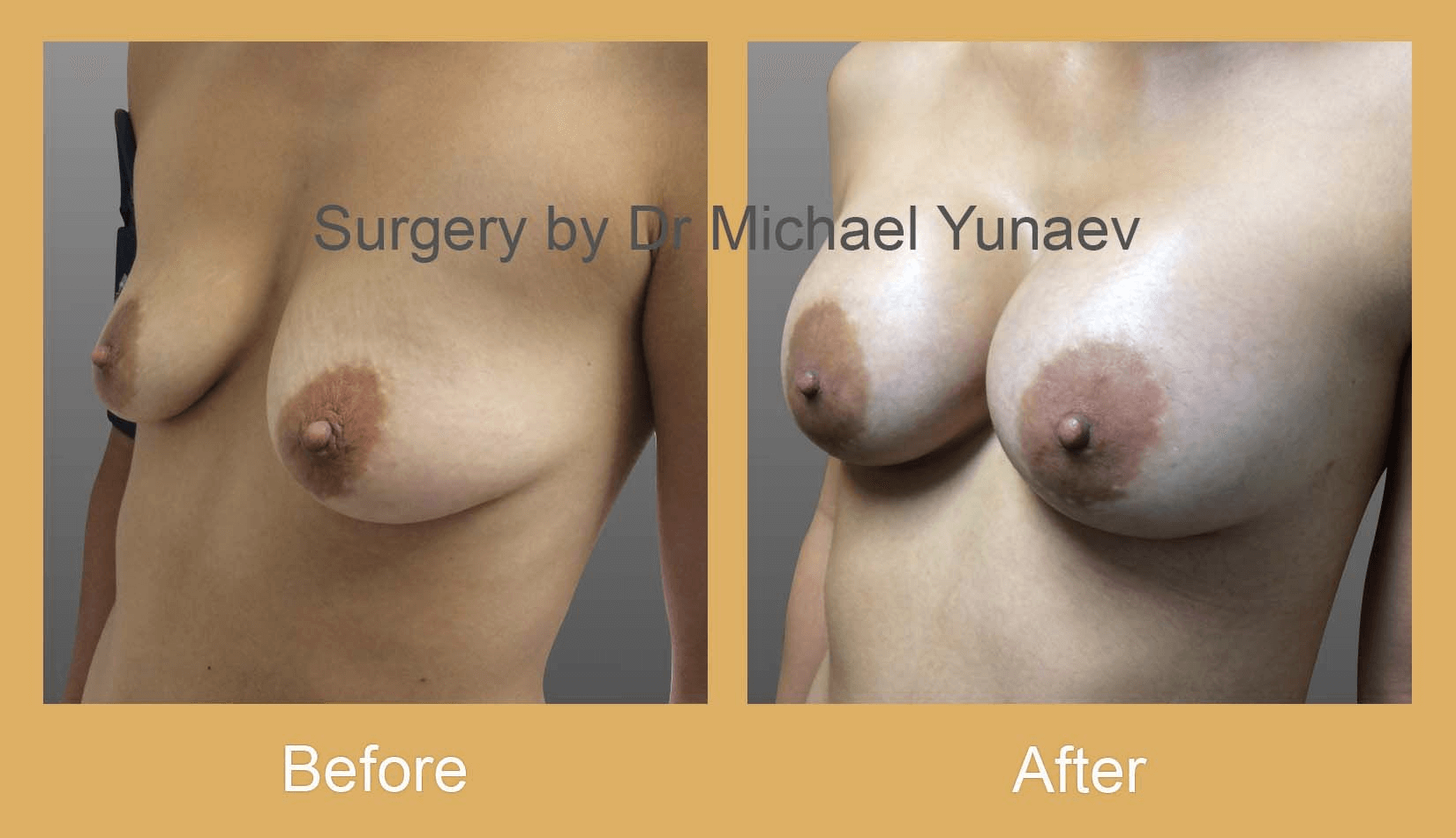
Implants don’t sit in their final position straight after surgery; they typically sit higher and firmer initially, then gradually soften and settle as the surrounding muscles relax and the tissue adjusts. This process is often nicknamed “drop and fluff,” and it’s a normal part of breast implant recovery time rather than a sign that anything’s wrong. Don’t be discouraged if your breasts look a little different at six weeks than you expected; this stage is still in progress.
Final Results: 6–12 Months
Most women see their true final result somewhere between six months and a year after surgery, once any lingering swelling has fully resolved, scars have faded, and the implants have completely settled. Scar tissue naturally forms around any implant as part of normal healing. This is expected and usually unnoticeable, though maintaining your results with sensible aftercare habits helps keep healing on track. If you’ve combined your surgery with fat grafting, the fat transfer breast augmentation recovery follows a similar overall pattern, though final volume can take a little longer to assess, as a portion of transferred fat is naturally reabsorbed in the first few months.

Preparing for a Smoother Recovery
A bit of preparation before surgery goes a long way. The Australian Society of Plastic Surgeons recommends setting up before your procedure with:
- A comfortable recovery area at home, with pillows arranged so you can sleep semi-upright
- Loose, front-fastening tops that don’t need to go over your head
- Ice packs, a thermometer and your prescribed medications within easy reach
- A confirmed driver for the day of surgery
- Someone available to stay with you for at least the first 24 hours
- Meals prepped in advance, since cooking will be off the cards for a few days
- A clear run of time off work, adjusted to how physical your job is
It’s also worth discussing your questions during your pre-surgery consultation, including anything raised in our guide to things patients wish they’d known before breast augmentation.

Dos and Don’ts During Recovery
Do:
- Sleep on your back, propped up slightly, for the first few weeks
- Wear your surgical bra or compression garment as instructed
- Stay hydrated and keep salt intake moderate to help manage swelling
- Take short, gentle walks from day one to support circulation
- Keep all follow-up appointments
Don’t:
- Sleep on your side or front until your surgeon clears it
- Lift anything heavier than a light bag of groceries in the first few weeks
- Raise your arms above your head or reach into high cupboards
- Smoke, since it slows healing and increases surgical risk
- Soak in a bath, pool or spa until your incisions are fully healed
Warning Signs to Contact Your Surgeon
Most breast augmentation recovery progresses smoothly, but it’s important to know which symptoms need prompt attention. Contact your surgical team immediately if you experience:
- A temperature above 38°C, or ongoing chills
- Nausea, vomiting or diarrhoea
- Shortness of breath
- Heavy bleeding or fluid leakage from the incision
- Worsening redness around the incision site
- Increasing (rather than improving) pain
These symptoms don’t necessarily mean something has gone wrong, but they do warrant a call to your surgical team rather than waiting it out. One of the more common complications after any implant-based surgery is capsular contracture, where scar tissue around the implant tightens.
Frequently Asked Questions
How long does breast augmentation recovery take overall?
Most patients are back to light work within a week and full exercise by six weeks, but the complete breast implant recovery time (including the final settling of your results) typically runs to six to twelve months.
How painful is breast augmentation recovery?
Expect moderate discomfort for the first week or two, generally well controlled with prescribed pain medication. Most of the sharper pain resolves within the first five days, settling into mild tightness or soreness after that.
When can I exercise after breast augmentation?
Walking is fine from day one. Most patients can return to their full exercise routine, including chest workouts, around the six-week mark, but always confirm timing with your surgeon first.
Can I breastfeed after breast augmentation?
Many women can breastfeed after augmentation, though implants can occasionally affect nipple sensation or milk supply for some patients. This is worth discussing at your consultation if future breastfeeding is a consideration.
When will I see my final results?
Implants “drop and fluff” over the following weeks and months, with most patients seeing their true final shape between six months and a year after surgery.
Will I have visible scars?
Some scarring is unavoidable with any surgical incision, but your surgeon will place incisions in the least visible locations possible, and scars typically soften and fade significantly over time.
This article provides general information about breast augmentation recovery and does not replace individual medical advice. Recovery timelines vary among patients, and you should always follow the specific guidance from your surgeon. If you’re considering breast augmentation, book a consultation with Dr Michael Yunaev to discuss what recovery will look like for you.







 Ask a Question
 Call Us
 Book a Consult