
Every week, patients come to our clinic for a consultation, expecting liposuction to do something it was never designed to do: help them lose weight. It’s the single most common liposuction myth we come across, and it shapes almost every other misconception on this list.
The reality is a little more precise than what most liposuction misconceptions online would have you believe. Liposuction is a targeted contouring tool for a body that’s already close to its healthy weight, not a shortcut around diet, exercise, or bariatric surgery.
Before you decide whether it’s right for you, it’s worth weighing up the liposuction facts vs myths, starting with the question we’re asked in almost every consultation: is liposuction a weight loss procedure at all?
Quick Answer
- Liposuction is a body-contouring procedure, not a weight-loss treatment. Most patients lose minimal weight.
- It’s genuine surgery, requiring anaesthesia and a proper recovery period, even when done as a day procedure.
- It permanently removes fat cells from the treated area, but it won’t fix cellulite, tighten loose skin, or touch visceral (belly) fat around your organs.
- Men make up a meaningful share of patients, and healthy older adults can be excellent candidates, too.
- A consultation with our team is the only way to know whether liposuction, a tummy tuck, or a combination is right for your goals.
Myth 1: Liposuction is a Weight Loss Procedure
Fact: No. This is the biggest of all the liposuction myths. Liposuction surgery is a body contouring procedure designed to remove stubborn, localised fat deposits, not a substitute for losing significant weight.
According to the American Society of Plastic Surgeons, most patients only lose around two to five pounds in total from the procedure, and the best candidates are already within about 30% of a healthy weight range. If you’re carrying significant excess weight, diet, exercise, or a discussion with your doctor about other options is the right place to start. Liposuction comes afterwards, once you’re closer to your goal weight and just want to refine specific areas.
Myth 2: Diet and Exercise Can Achieve the Same Result
Fact: Not quite. Diet and exercise reduce fat cells throughout the body in a fairly general way, but some pockets of fat (often on the flanks, inner thighs, or under the chin) simply don’t respond to lifestyle changes, no matter how disciplined you are. This is genetic and structural, not a failure of willpower.
Liposuction targets those specific areas directly, giving you a more sculpted, proportionate result that diet and exercise alone can’t achieve. It works best as a finishing step after you’ve already reached a stable, healthy weight.
Myth 3: It’s Not Really Surgery
Fact: It absolutely is. This is one of the more common liposuction myths we hear, likely because liposuction is often performed as a day procedure and some patients assume it’s a minor, low-key treatment. In reality, it requires anaesthetic, careful surgical technique, and a recovery period, the same as any other operation.
You’ll need to take time off work and avoid strenuous activity afterwards, just as you would with any surgical procedure.
Myth 4: You’ll See Results Immediately
Fact: Not straight away. You won’t leave the clinic with your final result on display. Swelling and fluid retention are normal in the days and weeks after, and a compression garment (usually worn for about 2 weeks) helps manage them while your body heals.
It typically takes several weeks to months for the true contour to reveal itself, as swelling settles and your skin adjusts to its new shape underneath.
Myth 5: Liposuction Doesn’t Hurt
Fact: It can, and that’s completely normal. As with any surgery, soreness, bruising, and tenderness in the treated areas are common in the first week or two. Most patients manage this comfortably with pain relief, and discomfort generally eases significantly within the first few days, though areas can remain tender for longer as deeper healing continues.
Myth 6: Removed Fat Will Come Back
It won’t, at least not in the treated area. This is a reassuring one to bust among the liposuction myths on this list. Liposuction permanently removes fat cells from the areas where it’s performed. However, that doesn’t mean you’re immune to weight gain. If you don’t maintain a stable, healthy lifestyle afterwards, the fat cells that remain elsewhere in your body can still expand. Maintaining your results is a shared job between the surgery and your ongoing habits.
Myth 7: Liposuction Treats Cellulite
Fact: This is one of the most persistent liposuction misconceptions, and it comes down to a simple misunderstanding of what cellulite actually is. Cellulite isn’t just excess fat; it’s caused by fibrous connective bands beneath the skin pulling down while fat pushes up, creating that dimpled texture. Liposuction only removes soft fatty tissue; it doesn’t touch those connective bands, so cellulite can remain unchanged and, in some cases, look more noticeable once the surrounding fat has been reduced.
If cellulite is your main concern, non-surgical body contouring options are generally a better fit, since they’re designed to address the structural causes of cellulite and skin tightening rather than just fat volume.
Myth 8: Liposuction Tightens Loose Skin
Fact: Not on its own. Liposuction removes fat, but it doesn’t affect skin elasticity. If your skin has good natural elasticity, it may re-drape reasonably well over the new contour. But if you have significant loose or sagging skin (which is common after major weight loss or multiple pregnancies), liposuction alone can sometimes leave a slightly deflated appearance, since the fat that was propping up the skin is gone, while the excess skin remains.
In these cases, a tummy tuck procedure or another skin-excision surgery is usually needed alongside or instead of liposuction to achieve a firm, smooth result.
Myth 9: Liposuction Can Fix All Belly Fat
Fact: Only some of it. There are two distinct types of abdominal fat: subcutaneous fat, which sits just below the skin, and visceral (or intra-abdominal) fat, which surrounds your internal organs deeper inside the body. Liposuction only removes subcutaneous fat, it can’t reach visceral fat at all.
This is why some patients with a protruding tummy don’t get the flattening result they expected. If visceral fat is the main contributor, no amount of liposuction will change that. Visceral fat responds to diet, exercise, and overall weight management, not surgery.
Myth 10: Liposuction Is Only for Women
Fact: Far from it, and this is one of the outdated liposuction myths that’s fading fast. While liposuction has historically been more common among women, men now make up a substantial and growing share of patients, and liposuction for men is one of the most common cosmetic procedures, often targeting the abdomen, flanks, or chest. The goals and techniques are largely the same: targeted removal of stubborn fat that doesn’t respond to training and diet.
Myth 11: Older People Shouldn’t Have Liposuction
Age alone isn’t the deciding factor; overall health is. A thorough medical assessment matters far more than the number of candles on your last birthday cake. The one age-related consideration worth knowing is that skin naturally loses some elasticity over time, which can affect how well it re-drapes after fat removal. This is discussed in detail during your consultation, so you know exactly what result to expect for your skin type and age.
Liposuction Facts vs Myths: The Bottom Line
Working through the liposuction facts vs. myths above, the common thread is this: liposuction is an excellent tool for refining and contouring a body that’s already close to its healthy weight, but it’s not a weight-loss method, a cellulite cure, or a skin-tightening treatment. Knowing the difference helps you set realistic expectations and choose the right procedure (or combination of procedures) for your goals.
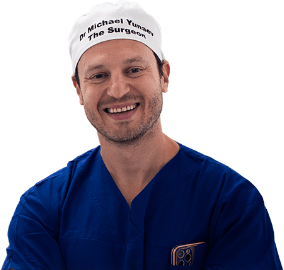
Sometimes that means liposuction alone. For others, it might mean pairing it with a tummy tuck procedure, or considering a broader mummy makeover surgery if you’re addressing multiple post-pregnancy changes at once. The best way to find out what’s right for you is a proper consultation with our team, where Dr Yunaev can assess your goals and talk you through realistic, honest expectations.
This article is general information only and doesn’t replace personalised medical advice. Every surgical outcome depends on individual factors, and your suitability for any procedure should be assessed during a consultation with a qualified specialist surgeon.









 Ask a Question
 Call Us
 Book a Consult