
Every day in Australia, more than 55 people are told they have breast cancer. That single fact is why breast cancer awareness exists as such a significant public health effort. Breast Cancer Awareness Month in Australia falls each October, and its job is simple: get more women screened, help them recognise symptoms earlier, and make sure nobody is left wondering what happens after an abnormal result.
This year, Cancer Australia estimates more than 20,000 Australians will be diagnosed with breast cancer, and one in seven women will face the disease at some point in their lifetime. Those numbers are confronting, but they sit alongside a more hopeful one: survival rates keep improving, largely because more women are catching the disease early through screening.
Key Insights
- Breast Cancer Awareness Month in Australia runs every October and focuses on early detection, screening uptake and symptom recognition.
- Free mammograms are available through BreastScreen Australia for women aged 40 and over, with women 50–74 actively invited every two years.
- Most breast changes and most screening recalls turn out not to be cancer, but every change still needs a doctor’s assessment.
- If you are diagnosed, the surgical pathway (lumpectomy, mastectomy, reconstruction) is more personalised and less disfiguring than most people expect.
What Breast Cancer Awareness Month Is Actually For
Breast Cancer Awareness Month Australia campaigns tend to focus on one message: get checked. That’s the right message, but it can leave out what a lot of women want to know once they’ve had a lump investigated, a mammogram flagged, or a diagnosis confirmed. Raising breast cancer awareness only works if it also answers the practical question of what comes next.
This guide provides the screening facts, the warning signs worth acting on, and a straightforward explanation of what happens if a mammogram or a symptom leads to something more.
The Numbers Behind Breast Cancer Awareness Month 2026
Breast cancer remains the most commonly diagnosed cancer among Australian women, excluding non-melanoma skin cancer. Here few figures worth knowing:
- The age-standardised incidence rate rose from 52 cases per 100,000 people in 1982 to 74 cases per 100,000 in 2021, reflecting both population growth and an ageing population, not necessarily a rising individual risk.
- Each year, around 20,000 Australians (including around 200 men) are diagnosed with breast cancer, and more than 3,300 people die from it.
- Breast cancer is the most common cancer in Australian women, with about 1 in 7 diagnosed in their lifetime, compared with roughly 1 in 600 men.
The reason Breast Cancer Awareness Month 2026 still matters despite decades of campaigns is that screening participation hasn’t kept pace with the message. Just over half of women in the BreastScreen Australia target group have participated in the past two years, meaning a large group of women eligible for a free mammogram simply haven’t booked one.
Are You Eligible for a Free Mammogram?
BreastScreen Australia provides free mammograms every two years for women aged 40 and over, with women aged 50 to 74 actively invited by state and territory programs.
You don’t need a GP referral, and screening mammograms are provided free of charge. Services are available in more than 750 locations nationally, including purpose-built mobile vans, buses and 4WDs, so location isn’t the barrier it once was for regional and outer-suburban women.
If you’re under 60 and have a strong family history of breast cancer or a known genetic mutation, you may also be eligible for a Medicare-subsidised MRI in addition to mammography. This is worth raising directly with your GP.
Screening works. A recent AIHW study found that 60% of breast cancers detected through BreastScreen Australia were small, compared with 30% for cancers found outside the program, and screen-detected cancers carried more than 50% lower risk of causing death than those found in women who had never been screened.
Know the Warning Signs, Even Between Screens
Breast cancer can develop between scheduled mammograms, which is why breast awareness matters alongside screening. Cancer Australia lists the changes worth having checked:
- A new lump or swelling, especially if it’s only in one breast (usually hard, irregular in shape, and it can appear anywhere on the breast, not just as an obvious mass).
- A change in the size or shape of the breast.
- A change to the nipple, including crusting, an ulcer, redness, or the nipple turning inward.
- Nipple discharge that happens without squeezing.
- A change in the skin of the breast, such as redness or dimpling.
- Swelling or discomfort in the armpit or around the collarbone.
- An unusual pain in the breast or nipple that doesn’t go away.
Several other conditions can cause these symptoms, not just breast cancer, so a change is a reason to see your GP, not a reason to assume the worst. If you’re weighing up whether a lump you’ve found needs further investigation, this guide on signs a breast lump needs surgery walks through what surgeons actually look for.
It’s also worth knowing that symptoms aren’t always present before diagnosis. 85% of women diagnosed with breast cancer by BreastScreen NSW had no noticeable symptoms, which is the strongest argument for keeping up with regular mammograms even when everything feels normal.
What Happens If You’re Recalled After a Mammogram?
Around 1 in 20 women will need further tests after their regular breast screen. If that happens, you’ll be booked into an assessment clinic, usually within a couple of weeks. The good news: around 90% of women who have further tests do not have breast cancer. A recall usually means the radiologist has spotted something that needs a closer look, not that they’ve found cancer.
Assessment typically involves one or more of the following:
- Additional mammogram views: closer, more detailed images of the specific area of concern.
- Breast ultrasound: sound waves are used to examine the tissue in more detail; painless and carries no radiation.
- Core biopsy or fine needle aspiration: a small tissue or cell sample taken for pathology, usually under local anaesthetic.
Recalls happen more often for women having their first mammogram, simply because there are no earlier images to compare against. Something that looks slightly unusual on a first scan can be completely normal for that individual once there’s a baseline to compare it with.
The Pathway From Diagnosis to Surgery
If a biopsy does confirm breast cancer, the next conversation is usually with a specialist breast surgeon, not just an oncologist.
Surgical options generally fall into two categories:
- Breast-conserving surgery (lumpectomy): removing the tumour and a margin of surrounding tissue while preserving as much of the breast as possible, usually followed by radiotherapy.
- Mastectomy: removal of the entire breast, sometimes recommended for larger tumours, multiple tumour sites, or specific genetic risk factors.
Which approach suits a particular diagnosis depends on tumour size, location, genetic risk factors, and personal preference. There’s no single “better” option, and a specialist will talk through the trade-offs of each.
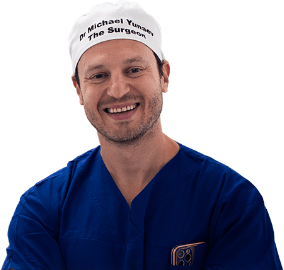
At Breast and Body Clinic, Dr Michael Yunaev works through this decision individually with each patient, considering both oncological priorities and aesthetic outcomes. You can read more about the breast lumpectomy process and what recovery involves, or explore the full range of breast cancer treatment approaches available.
Rebuilding After Breast Cancer
For many women, breast reconstruction is part of the same conversation as their initial cancer surgery, not something to think about later. Reconstruction can happen immediately, during the same procedure as a mastectomy, or later, once cancer treatment has finished. Options include implant-based reconstruction, tissue-based (autologous) reconstruction using tissue from elsewhere in the body, or a combination of both, depending on the individual’s anatomy and treatment history.
There’s no requirement to decide on reconstruction straight away, and choosing not to reconstruct at all is also a legitimate outcome many women choose. What matters most is having an unhurried conversation with a specialist who understands both the surgical and the emotional side of that decision.
Looking After Your Breast Health Year-Round
Breast cancer awareness shouldn’t be something that switches on in October and off again in November. Ongoing breast health means knowing your own body, keeping up with your two-yearly mammogram once eligible, and not sitting on a change for months because it doesn’t seem urgent. A GP appointment to check a new symptom takes far less time than most people expect, and in the vast majority of cases, it rules cancer out rather than confirming it.
Getting the Right Advice
If you’ve noticed a change, been recalled after a mammogram, or received a diagnosis, the most useful next step is a conversation with a specialist breast surgeon who can explain your specific situation clearly. Dr Michael Yunaev and the team at Breast and Body Clinic provide consultations covering diagnosis, surgical options, and reconstruction, so you can make decisions with full information.
Frequently Asked Questions
When is Breast Cancer Awareness Month in Australia?
It’s held every October, coordinated across government health departments, BreastScreen services and breast cancer charities nationally.
Do I need a referral for a free mammogram?
No. BreastScreen Australia doesn’t require a GP referral for women in the eligible age range.
Does a mammogram recall mean I have cancer?
No. Roughly 9 in 10 women recalled for further tests do not have breast cancer. It simply means an area needs a closer look.
Can breast cancer occur without any symptoms?
Yes. A large proportion of screen-detected breast cancers are found in women who had no noticeable symptoms, which is why regular mammograms matter even when nothing feels different.








 Ask a Question
 Call Us
 Book a Consult